Showing posts with label Google Drive. Show all posts

Thursday, April 30, 2015

Dear Diary....

Writing Across the Curriculum


Generally, students love to write. If you ask them to write about themselves, they may write a book. Students get better at writing by practicing to write! I am sure many of you have a daily writing activity, regardless of the class you teach. If you were to gather up writing samples throughout the year, you would be able to show the steady progress your students have made. Studies have shown that students will type more than they write/print. That has always been true when I worked with students.

I recently had a request from a classroom teacher who was trying to add a new twist to a project. Her students were going to "become" someone fighting during the war. She wanted them to be able to share their experiences and what they were learning each day from the view of a soldier. 


Have you seen the "My Diary" app? This would be a wonderful way to pull up one students work, and see their progress in writing conventions. Students can not only write with this app; they can also add pictures, tables, highlight text, add bullets and headings, and add links to external materials. It is easy to use. The option for a larger font, makes it kid friendly for younger friends. They can have more than one diary, so they could be writing for different classes.


Use the settings tab to link your files and labels so that they Export to Google Drive.


Friday, November 14, 2014

Collaboration Cool Tool
RealtimeBoard for Education

Good Looking, Powerful, and Chrome-Ready Mindmapping

Screen Shot 2014-11-14 at 6.00.19 AM.png

In my research to write this article (Cool Tools for Collaboration) I saw tons of workspace apps for the iPad and Chrome. They all give the students a virtual space to collaborate with similar features. The Apple Apps were more pleasing aesthetically and easier to teach with than the Chrome alternatives with which I was familiar. Chrome apps had a little more functionality than the Apple Store offerings, but those are typically more distracting than helpful in the classroom. I like the versatility of Lucid, but the design space is clunky. The Chrome version of Popplet is attractive, but lacks function and has lost the trust of our teachers because of some connectivity issues.

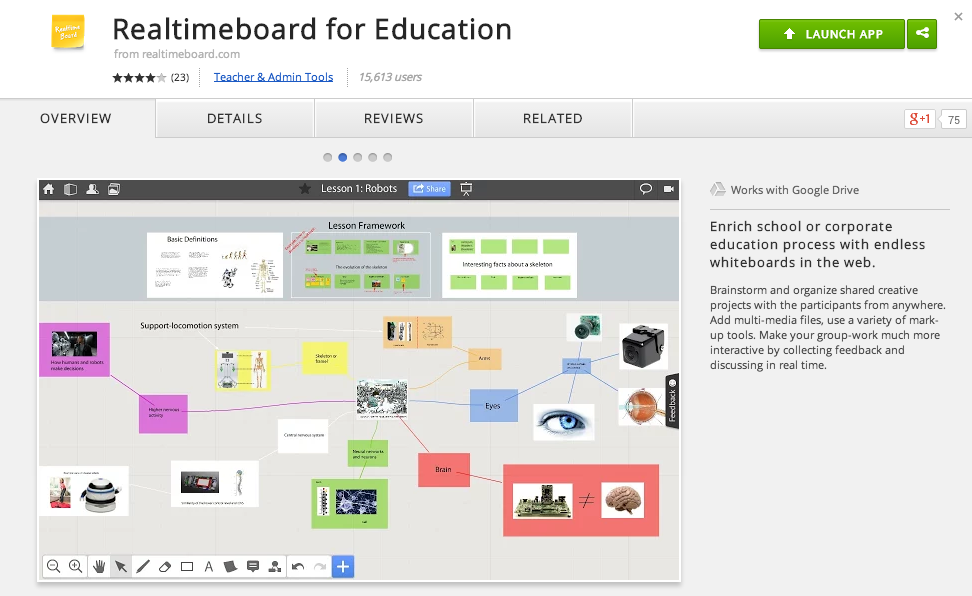
In my search to find something easy to use, powerful, and attractive for my Chromebook users I stumbled upon RealtimeBoard for Education. It is already loaded into the Moore@Schools Webstore and ready to use now.
Screen Shot 2014-11-14 at 6.03.50 AM.png
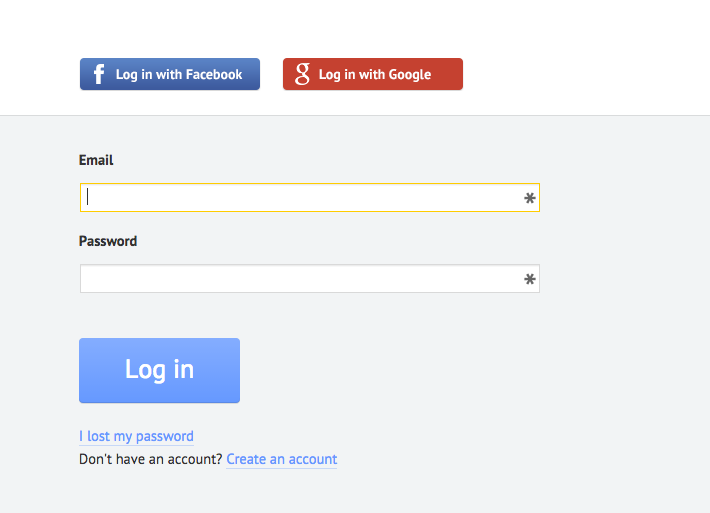
RealtimeBoard EDU supports single signin with edu gmail accounts.
Screen Shot 2014-11-14 at 5.14.39 AM.png
Screen Shot 2014-11-14 at 6.01.33 AM.png
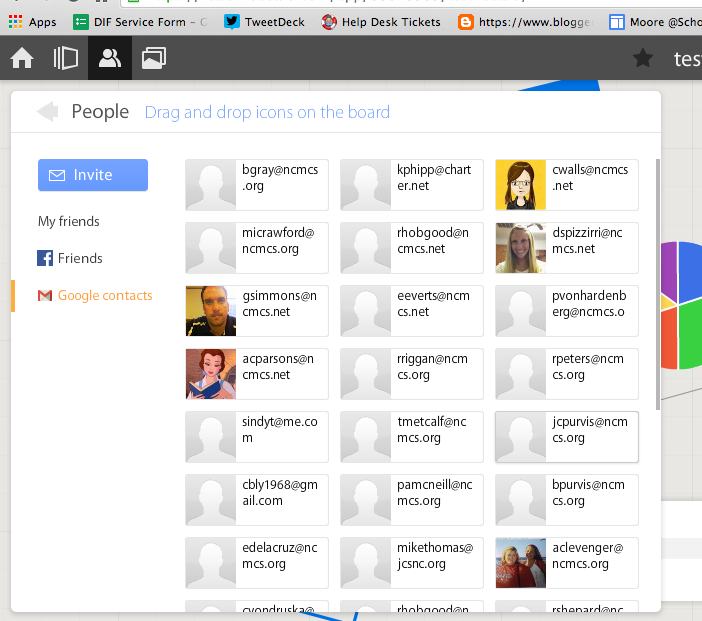
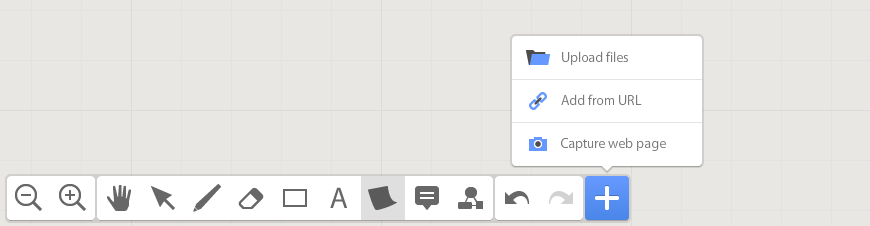
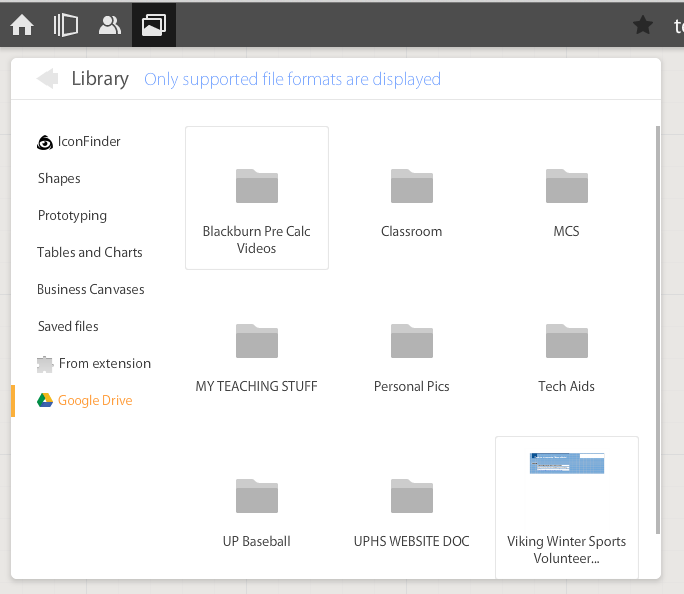
If allowed to do so it will also link to Drive like Lucid (very handy) and collaborators can be located and added through gmail. The user can also add an extension to capture whole or partial screenshots that will be automatically added to the RealtimeBoard Library (handier than I originally thought it would be).
Screen Shot 2014-11-14 at 5.22.29 AM.png
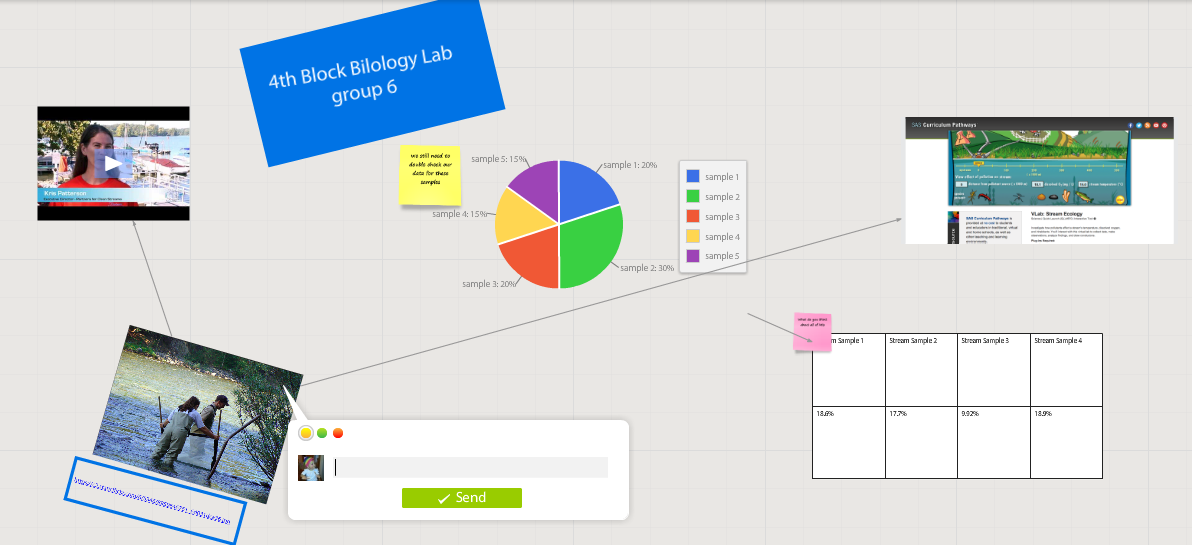
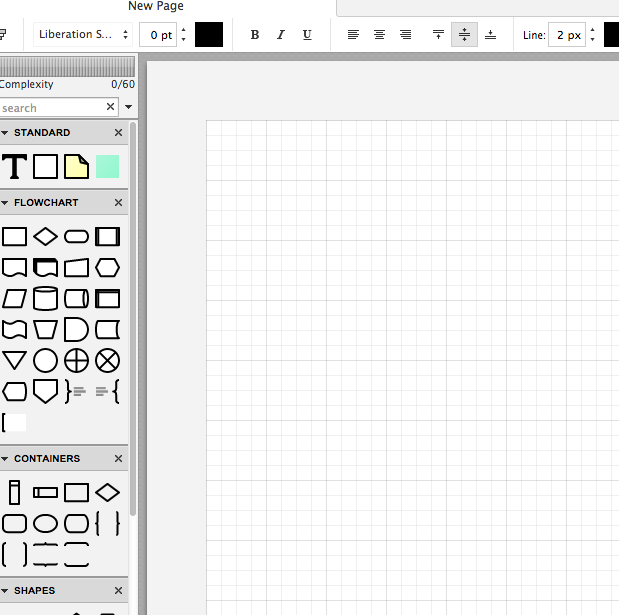
RealtimeBoard EDU has a great, clean space for the students to collaborate synchronously. It utilizes pretty common features for this type of program including drawing tools, shapes, connectors / arrow lines, and text boxes. The types of shapes & text bubbles are far fewer than Lucid but more than adequate for our needs.

RealtimeBoard EDU Lucid
Screen Shot 2014-11-14 at 5.24.20 AM.png Screen Shot 2014-11-14 at 9.15.59 AM.png
Screen Shot 2014-11-14 at 5.32.28 AM.png

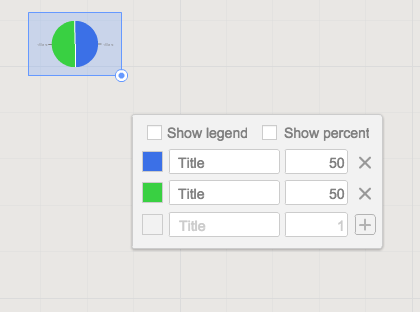
Students can embed video as with Popplet using the URL. Additions to those common tools include very easy to generate tables and charts (pie and various bar graphs).
Screen Shot 2014-11-14 at 5.35.55 AM.png
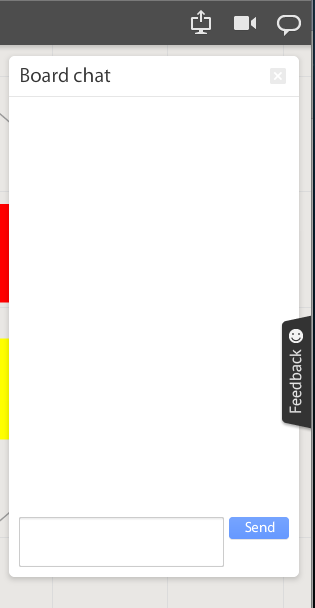
Students communicate in the workspace by generating post-it type notes, screen-share or by the onscreen “board chat” feature.
Screen Shot 2014-11-14 at 9.06.50 AM.png
What is unlike similar applications? RealtimeBoard lets users import entire documents, pictures, screenshots (very easy if you add extension--not currently in the Moore@School WebStore).

As students analyze these pieces and begin to see how they work together they can organize or combine the elements to convey a larger story.
Screen Shot 2014-11-14 at 6.00.19 AM.png
Student/students can save their work to Drive, download as PDF, add the instructor as collaborator, or send them the link. This many ways to submit make it quick and easy.

I really like the application at this point and I am happy to have an attractive alternative for my teachers. I anticipate this will be a big hit. Instructionally it could be modified to fit most assignment types and levels of Bloom’s framework.

__________________________________________
Ideas for Instruction:

Science: Lab & Experiment Reporting, Categorization

Social Studies: Biographies, Primary Doc Analysis, & Complex Cause-Effect

Math:Terminology, Illustrations of Real World Application of Skill

ELA: Character Development, Thematic Strands in Story, Types of Poetry, Mood/Tone/Theme

Foreign Language: Cultural Elements, Dialectic Variations, Topically Related Verb/Nouns
_______________________________________________________________________________
If you have found any other great alternatives or have something to add to the discussion here just post a comment below.

Will Herring, MEd-IT NBPTS
Moore County Schools, IDI DIF

@WilliamHerrin16

Friday, September 12, 2014

What's? and Hows? of the New Google Classroom

What's? and Hows? of the New Google Classroom 

I have been leading a weekly roundtable of teachers using the recently released Google Classroom. Overwhelmingly the teachers are pleased with the platform’s material distribution capacity and thrilled with the automated collection and storage. For those of you that have not had a chance to play with it yet, I’ll walk you through getting started.


Setting up your Stream:

Navigate to classroom.google.com and login using their Google for Education enabled credentials (Classroom App is available in the Google Store). You will be asked if you are a teacher or student. Once you have successfully logged in, you are taken to your personal “home screen”  seen in image II.

Screen Shot 2014-09-12 at 3.pngScreen Shot 2014-09-12 at 3.png
What we found: You see in screenshot II that I am both a teacher of sections and a student in an honors biology course. We found it to be very useful to “join” each others courses so we could preview how our assignments looked from the students’ perspective.

Click the “+” (shown above) to “Create” or “Join” a course. To join a course, enter the alphanumeric class code and the icon for that course will appear on your homepage.

If you create a class, you will be prompted to give it a name. After be taken to the class “Stream” (stream is like your Facebook wall) where you will post announcements and assignments. On the left sidebar of your screen you will see your class code so that others can enrol in your course.

What you will not see initially is that Google has also created a folder in your Drive account called CLASSROOM. It will create a subfolder here for each class you create.

In the top left of your screen you will see three horizontal bars that will return you to the home screen. In the top center, you will see three options:
1) Stream -- announcements and assignments, 2) Students -- shows the name of everyone that has enrolled in your course, 3) About -- allows you to give your course a description.  


Ready to add to your Stream:
You have two options; Announcement or Assignment. They are essentially the same but Assignments have a few additional features that are the beauty and power of Classroom.

This is always at the top of the teacher’s screen Screen Shot 2014-09-12 at 3.38.57 PM.png

Clicking on Announcement drops down to look like this
Screen Shot 2014-09-12 at 3.39.51 PM.png
You can see you are asked to enter the text you wish your class to see. You can also add attachments, insert any type of material stored in Drive, embed a YouTube video or link to an external site.

What we found:
We have not found a limit to the number of items you can put here; it will also accept entire folders from your linked Drive account. Click Post to add it to your Stream.

Clicking on Assignment drops down to look like this
Screen Shot 2014-09-12 at 3.39.57 PM.png
See the additional line for instructions. Set a due date and time if desired. All the same attachment options exist here with a new choice of if you want the students to view the resource or be given their own copy automatically. Plus is names those documents with the name of the assignment + the student’s name. Click Assign to post to your Stream. If you need to change a post, do so by clicking on the three dots in the top right of the announcement or assignment.

What we found:
Changing assignments: Your students see the version of the assignment posted when THEY accessed their Stream. If you make any edits after student open the course they will need to refresh the screen to see the changes.
Only use assignment if there is a document, poster, etc… to turn in. Filling out forms or writing a hard copy journal does not result in deliverables; they can’t upload anything. When this happens, Google thinks they have a missing assignment.

Getting students work:
When you have students make a copy Google does two things behind the scenes: 1) Google creates a subfolder in your Drive>Classroom>Class> with the name of the assignment. 2) When a student creates their copy it will automatically be deposited within this folder.
Back in your Stream, you see how many students have started their work, how many have turned in their work, and you can click the students’ name to give real time feedback. By clicking on the assignment you can open, grade and email students their feedback.
Screen Shot 2014-09-12 at 4.27.03 PM.png
What we found:
Return acts as both a send and save button. If you exit without clicking Return you will lose any grades you had entered during that session.


Conclusions:
We are infatuated but not in love with Classroom...yet. It is better than most of its predecessors: Edmodo, etc.. The group and I continue to tweak how to use it best and what it needs to be better. I’ll keep you updated.

My next post will be on the subject of what and how to supplement the Classroom with synergistic systems.

Monday, June 16, 2014

Maintaining Assessment Integrity in the 1:1 Environment


Maintaining Assessment Integrity in the 1:1 Environment

I continue to hear the notion that web enabled devices and / or 1:1 devices undermine the integrity of our classrooms and assessments. The truth is that it is no more in danger than at any other point. The strategies used by students looking to get over on teachers has changed; but if they can adapt, so can we. I want to show you a couple of quick tips & tricks to tackle some of your usual suspects:


Cheating
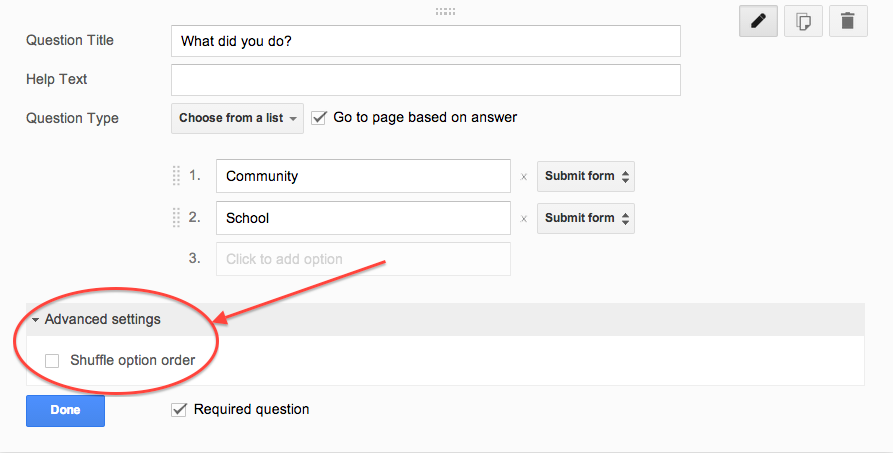
Cheating will be attempted in the standard, Honors, and the Advanced Placement version of any course. It is difficult to catch but easy to vex. If you are using Google Forms (which I recommend) to conduct M/C or T/F quizzing, this has a simple fix. After you write a question click “advanced setting” above the “Done” button. Check the box “Shuffle Option Order” & you’re all set.


Screen Shot 2014-06-16 at 4.35.55 PM.png


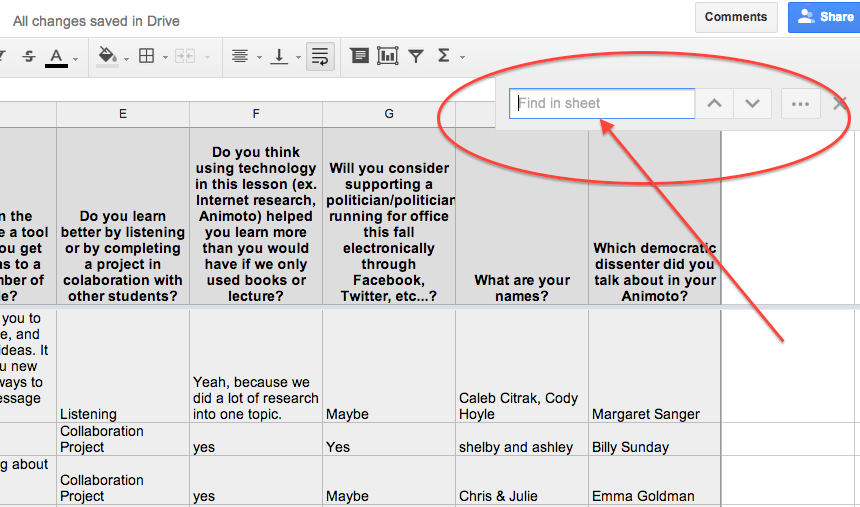
For short answer text questions you can go into your Google Sheet and pull up your suspect’s answers, use the Ctrl F feature to search for similar student responses. Confront them cautiously because your evidence is only circumstantial. It may be enough just to poke them with a little joking comment to make them understand you are on to them. Redirection of behavior is our goal. Getting caught is a teachable moment.


Screen Shot 2014-06-16 at 4.37.53 PM.png


Plagiarism

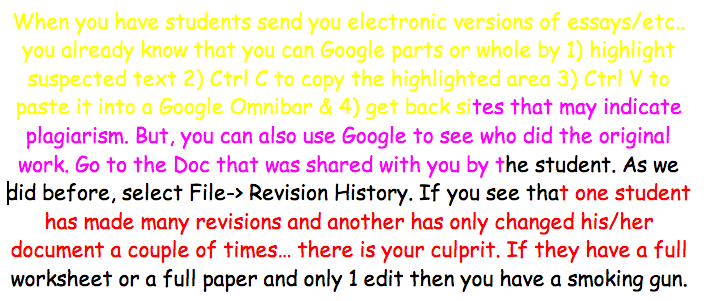
When you have students send you electronic versions of essays/etc.. you already know that you can Google parts or whole by 1) highlight suspected text 2) Ctrl C to copy the highlighted area 3) Ctrl V to paste it into a Google Omnibar & 4) get back sites that may indicate plagiarism.
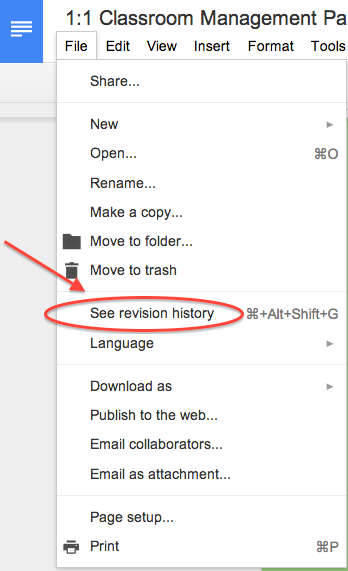
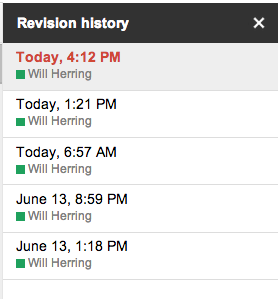
But, you can also use Google Revision History to see who did original work. Go to the Doc that was shared with you by the student. As we did before, select File-> Revision History. If you see that one student has made many revisions and another has only changed his/her document a couple of times… there is your culprit. If you have a really difficult situation between students you can go as far as to see the timestamped revision in which the actual questioned portion is contained. 

It is probably needless to say that if they have a full worksheet or a full paper and only 1 edit then you have a smoking gun.


Screen Shot 2014-06-16 at 4.09.11 PM.png


The Worst Partner EVER; (AKA: UN-collaborator)


We’ve all listened to students complain that they did more work than any other member & it’s UNFAIR! One easy way to check for participation is to have students collaborate in a Google Doc using different color text. You can eyeball the doc to see who is doing what & if a dispute arises use the revision history feature to see if someone has altered another student’s work. To see the “Revision History” of any Doc click on “File” -> “Revision History”


Screen Shot 2014-06-16 at 4.54.54 PM.png


Screen Shot 2014-06-16 at 4.09.11 PM.pngScreen Shot 2014-06-16 at 4.12.19 PM.png

Keep in Mind

The cat and mouse game is centuries old. The Chromebooks are just a new field of play. Don’t spend too much effort building a better mousetrap. Instead spend your time creating challenging and interesting lessons with authentic assessment items that incorporate student product generation and publication. Embrace the notion that students have access to any fact based knowledge in the history of man in their pockets and ask them to DO something with it!


Add a teacher pro-tip in the Comments section below if you have even more ideas

Will Herring
MCS DIF

Friday, June 6, 2014

What is Google Drive & Why Use It?

Google Drive....A Closer Look


   Over the past year, there have been many questions surrounding Google Drive. Teachers, students, parents, and administrators are all curious as to why Google Drive ('the cloud') is being used as a storage space for information. It is a new idea, and ventures away from the traditional save and email documents modality. As with most new ideas, they are approached with caution and apprehension at times. Therefore, it is important to learn the benefits of Google Drive, before deciding one way or another.
   Google Drive, in a nutshell, is an online storage space. Documents, media, presentations, and much more can be housed in 'the cloud'. The benefit of using an online storage space, like Google Drive, is the accessibility of documents, without the fear of them being lost. Anything stored in Google Drive, can be accessed from any device, at any time, and from anywhere. Therefore if your computer breaks, you can still access and work on your documents from a different device.  This is an important feature in that it eliminates the worry of the 'computer crashing', and losing all of your information. 
   Also, Google Drive contains its own unique suite of writing tools. Google Documents (word processing), Google Slides (presentation), Google spreadsheet, and Google Drawing are among the basic tools provided on Google Drive. With these documents, students and teachers have the ability to collaborate on work, simultaneously. This notion assists teachers and students in achieving work completion, despite overlapping schedules.  
   Lastly, through Google Drive, the user has the ability to share documents with others. Once documents have been shared, the user can determine whether others can edit, comment, or simply just view their work.  Once work has been shared with another person, there is no need to share again if revisions have been made or suggested. This is an important piece to Google Drive, as it alleviates the need to email documents back and forth for every revision. 
   Just like any other tool, Google Drive will have its positive and negatives. The important question to keep in mind is, does Google Drive best suit your needs as an educator? The only way to truly determine its benefits for you, is to try it out and ask lots of questions! Best of luck on your Google Drive journey!
~Deanna Spizzirri

Monday, May 5, 2014

Collaborating with Google Drawing

Collaboration is a key 21st Century skill. Google has a Drawing feature that allows students to collaborate on a work space that allows them to insert images, text, shapes, lines and scribbles.  Like other Google tools, Drawing allows for comments and chat while collaborating.  During our Pilot Project for our 1:1 initiative, teachers used Google Drawing to create timelines in English class and Science safety diagrams in science class.  Student final projects were created in Google Drawings to share out links to their mini-projects.

Once your drawings are complete, you can use them pretty much anywhere.  You can save them as multiple file types (.png, .jpeg, .pdf and .svg) and insert them into documents or embed them into websites (once published to the web).  A cool feature of Google Drawings is the snap to grid feature that allows you to easily align objects with precision.  The best part about Google Drawings is that it is FREE!

Some ideas for using Google Drawings in the classroom:

  • Timelines
  • Mind mapping
  • Brainstorming
  • Flow charts
  • Procedures
  • Geographical mapping
  • Posters
Let us know how you are using Google Drawings in the comments!

Tyler Callahan
jcallahan@ncmcs.org
@STEM_TC

Tuesday, April 1, 2014

6 Quick and Easy Ideas to use Fresh-Out-of-the-Box Chromebooks

So you've gotten a class set of Chromebooks. Now what?  

Check out 6 easy ideas you can take and use with students while your laptops still have that new Chromebook smell:


1. Research and Note-Taking with Google Docs:  Students research topic(s) and record notes into Google Doc to share with others or save for themselves.

2. Vocabulary Work:  Students create a Google Doc of words and research definitions, record in own words, and insert visual representations for each word.

3. Create and Share with Drawings:  Using Google Drawings, students create posters, flyers, handouts, signs, etc.  Can do solo or invite group members to a shared document.

4. Jigsaw with Google Presentations:  In small or large groups, one student creates a Google Presentation and shares with other members.  Each member is then assigned one piece of the larger puzzle to create a new slide to report back what they learned.

5. Quick Feedback / Backchannel TodaysMeet:  Create a Todaysmeet.com chat room and allow students to use space to respond to questions, reflect on presentations or videos as a group, or stage lively debates.

6. Play, Explore, and Create: Allow students to explore web apps for music/video/animation production.  Great ones to play with that are easy to get rolling:  uJam, Wevideo, Animoto, Picmonkey, and Voki.

Monday, January 6, 2014

Top Ten Offline Chrome Apps for Students

One of the biggest criticisms of the Google Chromebook is that it is useless without a wifi connection.  This, however, is a myth!  There are lots of great and powerful tools that students can access without a wifi connection and the Chrome Web Store is adding more offline apps each and every week.


My Top Ten Favorites (as of now!)
(to explore more on your own, simply visit the offline section of the Chrome Web Store and browse)

Google Drive- A definite must-have.  Enabling offline access to Google Drive allows students to view all of their Google Drive documents with or without a wifi connection.  Also, students can create documents, presentations, drawings, and spreadsheets offline.  The creation process is exactly the same- when the Chromebook next logs in and has wifi access, these documents automatically sync to the student's Google Drive account.  Click here to see how to set up offline mode for Google Drive.

Lucidchart  -  This is a mind-mapping app that allows students to create and edit their maps while offline.  This app also allows students to export their files to their Google Drive account.

Pixlr Touch Up - This is a version of Pixlr that allows simple photo editing and saving while offline.

Gliffy - Another easy mind-mapping app that works well offline.

Google Keep - a quick note-taking app that syncs with Google Drive.

Timer Tab - Includes a timer countdown, a stopwatch, and alarm clock

Pocket - Allows students to save online articles for offline viewing.  This is a great way to have students without home wifi access to still be able to do research at home.  Unfortunately, there is no way yet to store videos for offline viewing, but the word is this will be coming soon!

Sketchpad - Allows students to create posters/drawings.  Students can insert pictures, shapes, text, drawings, and stamps.  Files can then be easily saved to the Downloads folder (jpg, pdf, png, zip) and uploaded back to Google Drive once they are connected to wifi again.

Until AM - Fun little offline app where students can take two pieces of audio and splice them together, add distortions, and remix songs. Only limitation is that there is no way to export or record the new mix (if online, this can be recorded through a Web Store app called "Voice Recorder" which records from the Chromebook's microphone and saves the output as an mp3 file).

Planetarium - This is a nice app to use if students want to explore the stars offline.  It helps that this is an offline app in that it can be used anywhere outside to view and match stars and constellations to the nighttime sky.

There you have it!  My top ten as of today (in no particular order).  I reserve the right to change my mind, as we're seeing more and more great offline apps come available to the Chromebook (Wevideo Next is one to keep an eye on.....).

-Steve J